Follow Amy Lou
  A Woman's Words
  • Home
  • Ecology and Spirituality
  • Community and Kin
  • Sacred Activism
  • Planet
  • Home
  • Ecology and Spirituality
  • Community and Kin
  • Sacred Activism
  • Planet

 Education

Freedom and Creativity: Home Education

6/9/2016

0 Comments

 
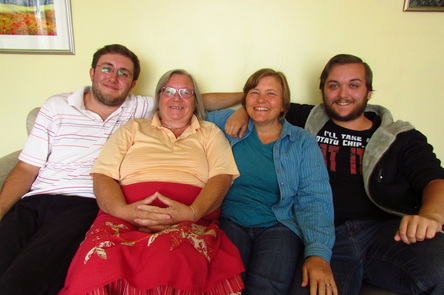
I have been thinking for a while now about starting a family one day, but I always felt like I would not want to bring a child into this world if they have to struggle and suffer for survival, which is what I see around me every day. This is one of my main motivations for beginning this blog: I want to bring my child up to be the best and happiest they can be, and I don't see how I can do that within the current system that we have. So one thing I want to research is alternative schooling. Our family friend Mandy home schooled her son Dan, so I wanted to learn from them about their experiences. They invited their friends Susan and her son Simon to talk to me too. This is our fascinating conversation...
Picture

Susan: Simon was always a content and happy child, who was confident to be around anybody. By the time he was 6 he had changed completely, and wouldn't stop clinging to me! The only difference was that he had started school. At age 7 he was reading slower than the school thought he should, the teacher and other students noticed, and he started to believe he was stupid. He was tested for learning disabilities but it turned out he just thought that the books were boring: he couldn't see the point in learning to read if all he read were these silly stories. The teacher started bullying him for not doing what he was supposed to, and the other children followed suit.

When Simon was 9 he refused to go to school for 10 days. We spoke to the educational welfare officer, who was brilliant and helpful. Around that time I met a friend who was home schooling her child. They were on a TV program on channel 4 about home education, and I let Simon watch it. Shortly after that he started asking me if he could stop going to school. Before that he thought that he had no choice, which is what the head mistress told me to tell him- that it's the law! (Actually it's only the law if you are registered at a school.) He took in a letter to say that he was de-registering from school, and he left!

Mandy: when Dan was 8 I noticed that he was slowly becoming serious about life, whereas before he was so light-hearted. We were reading and learning together way before he started school, and we had fun with it. What I didn't know is that I had set him up for being bored to death at school! He was such a good and responsible child, and would always do whatever was asked of him. The school noticed and took advantage of this, asking him to help other pupils and look after anyone new to the school. The pressure put on him was too much, and he would come out of school with a stormy face.

I discovered that the law actually states: ''It is a parents' responsibility to ensure the child is educated to a level according to their age, aptitude and ability, in school or otherwise'', and I was quite happy to do the otherwise! I think every parent should be told this before sending their child to school (or even while still in the womb, as a parent who home schools their child can have a whole different life plan from the beginning.)

When I asked Dan if he wanted to learn outside of school, he said ''yes, but what about friends?'' and I didn't know the answer. My mind was in turmoil. When he was 10 we bumped into a local source of knowledge: right around the corner from our house lives the guru of home education! Dan was determined to stay at school for the Halloween disco (he was a right little mover and always won sweets!), and after that he left.

It took a few months to get used to not having to get up at a certain time, no school routine, not being accused unfairly of disrupting the class, when actually he was asking others to be quiet! (To be fair the teacher can't police every situation, the set-up is unfair from the start!) But we quickly learned to get on, make friends within home education groups, and we both learned so much!

Dan: I actually found that the richest friendships I have ever made were those made through home education. They were not just ''school friends'', who would be dropped when I moved on to other things, but ''friends for life''. And we would mix all ages and genders, from all walks of life. I like my people like I like my food: blended, mixed and full of flavours! And home education gave me that. Each family would contribute their skills or organise workshops. We dipped in and out of astrology, Italian, archery (while the school kids were doing sports day!) Simon and I are in our early 20s now and we still get together once a month. We socialise with the parents too, not just people our age. It's a mix, whereas school separates you into ages and genders. But that's not life!

Simon: We had a community bringing us up, not just my mum, but all the adults would look out for me. My mum didn't ''teach'' me, like sit me down with paper and pen like in school, but she 'facilitated learning'. We had a network of families that built the learning environment together. The best example of this was when we created a group for the First Lego League International. We built a robot with motors and sensors that had to complete tasks on a board. The first year was Ocean Odyssey, so we had to 'rescue a dolphin', and learned about sonar affect on dolphins and whales. Funnily enough the competition was on the day the whale went up the Thames- because of sonar! We had a team of 10 people aged 10-15, and we came 27th out of 52 teams worldwide. In our third year we went to Japan for the Asian championships. 

The HESFES is the Home Education Seaside Festival. It's in a campsite with about 1500 people all home educating. They facilitate free workshops in metalwork, circus skills, singing, science. And we did one on robotics, which encouraged other home ed groups to start their own groups, and go beyond what we could achieve. To come from a place of struggle and the feeling of being small, to influencing something positive worldwide, is an incredible feeling.

Susan: The point of home education is that the child can learn at their own pace, and only what they are interested in. You could get a child aged 7 at graduate level ability, but school wouldn't allow them to go that far. They can't be too slow either! Outside of school the children can learn from those who are passionate and really know what they are talking about. I once saw one 7 year old discussing quantum mechanics with a top scientist!

Dan: one of my favourite things was when we went to the residential centre in Devizes and had a team building weekend. For example we had a giant see-saw and had to get everyone on it! We had to work together to balance, otherwise everyone would fall off. Different families brought different things. One did a 3D animation and we photographed the clay models to make a film. We once hired a hall and did a weaving day. The lady who did it was surprised how much the children got into it and interacted with her, very different to school groups she'd done. We have a forum where we put up activities, so people only come if they are interested in the activity.

Mandy: We would go on days out, like to Glastonbury. The first HESFES gathering was magical, but it was huge and hard to get to know people. So we decided to create a Wiltshire one. We found a place to have a campfire, sit around singing songs, and someone gave us Scottish country dancing lessons! We organised it ourselves and it went so smoothly. 

Amy: What keeps coming up for me is the competitiveness of school, and sports day etc. It seems that you don't have that element with home education. You work as a team, always co-operating as a community. There is no separateness and no feeling of wanting to be better than anyone else, but simply the best that you personally can be.

How did you feel after you left?

Dan: I Felt relieved knowing I was leaving, but it took 3 years to fully recover. There were 2 sides of me, one side hyper, which annoyed some people, including Simon! The other side was begrudging the world, and I got unhappy if a person didn't act the way I would expect. Once I had finally relaxed my expansion was amazing! At age 13 I went to look at going to New College and decided I wanted to go. I started at 14, and had to take some GCSE equivalent maths and English classes. But the rest I could choose myself. I thought it was excellent!

Simon: I went to college but found sticking to a timetable frustrating. If I was engrossed in something, I wanted to continue. So at the end of an hour I would be in the flow and have to stop. In my first lesson the English teacher said ''we are reading Shakespeare'' and everything from school came flooding back. I went to the learning support teacher, who put me into functional skills English and maths. She was great! I was later assessed for dyslexia and scored a 2.4 of 4. That meant someone took notes for me in lessons, and I got 25% extra time on all exams, so I didn't feel as pressured and could go at own pace. I didn't necessarily need extra time, just having the freedom helped. The learning support tutor was amazing, and it was great just knowing someone was on my side. New college was a great experience as unlike school I chose to be there and chose the subjects. I had to do maths and English, but also chose photography, software development web design, fashion design and textiles. In the textiles exam I had 5 hours to do something craft related, and I could chose whatever I wanted, which was fantastic! I made a knitted shawl.

Dan: The best thing about home education was having the freedom to be fully yourself in your expression. I felt I was entitled to unlimited power because you have the freedom to be you. I also took maths, English, photography and I-media, which covered game development and website design. In my first year I was embracing the new social environment and was lazier than I could have been! I took year off, then went back the next year and took photography, where I met my girlfriend Kayliegh. I always went for what was interesting, not what was needed. Home education makes you more free to be open and creative when you set your mind to tasks.

I don't have a plan for future. But unlike the way we're taught, I don't fear for my future. I know I can create it as I want it: I know I can manifest it. I just know it will be good and know how I want to feel. I know how to respect people, and how to speak my truth. I can let go of people who are no good for me, which is very liberating. 

Susan: All I wanted to produce is a happy adult. It feels like a huge risk to take your child out of school, and you wonder: am I doing the right thing? At school you are told to work hard, achieve exam results, go to university to get a good job. But it's a lie! Children have all this homework, but have no life or self-expression because they spend their time doing irrelevant stuff. My idea was to create child centred autonomous learning: if he was interested, we did it. If not, we didn't. He learned to access words not through reading books (because he refused!), but by reading street signs and on the computer. The first time he saw the point in reading was through reading instructions for a computer game: because it had a purpose!

Simon: I would love to set up a centre where people can access whatever they need for freedom learning. There were so many things we couldn't do because we didn't have the resources like in a school, such as chemistry. I would make a centre that has access to all that a school has, and more. And I would do it in the middle of a wood!

Amy: Let me know when you do that, Simon. I'll be bringing my future children!
0 Comments


Leave a Reply.

    Archives

    February 2017
    September 2016

    Categories

    All

    RSS Feed

subscribe
For further information please contact me here
or email me at:    [email protected]


​
articles and photographs copyright: Amy Lou Martin
Photos of Amy Lou taken by Maya Claudia Ferretti